
How Arrest Warrants Work in Alexandria City
Virginia law puts arrest process in the hands of a judge, certain court clerks, or a magistrate. The officer taking the complaint examines the complainant or witnesses under oath. Felony charges require a written complaint, and so does any request from a complainant outside law enforcement. When the sworn facts show probable cause, the judicial officer issues the warrant. In Alexandria City, the police department or another agency brings that complaint to a District 18 magistrate or another authorized officer. From there the paths split: General District Court holds felony preliminary hearings, while Circuit Court tries felony indictments. The issuance authority statute and the probable-cause statute spell out each step. For the charge itself, the court file is the source, not a general police crime database.
How a Virginia Magistrate Finds Probable Cause
Everything starts with a sworn complaint or an examination of witnesses. Virginia Code § 19.2-72 demands that oath and sets the rules for written complaints. There is one more hurdle for felony process sought by someone outside law enforcement or animal control: the magistrate needs prior authorization from the Commonwealth's Attorney or from law enforcement. Those rules guide issuance. They do not turn every complaint into a warrant. Alexandria City sits in District 18, and its magistrates work out of the Adult Detention Center. They examine complaints, issue warrants or summonses, and set initial bail. That last step matters, because a summons directs a person to appear, while an arrest warrant commands an officer to make an arrest. The Virginia Region 5 magistrate listing shows the Alexandria district and how to reach it.
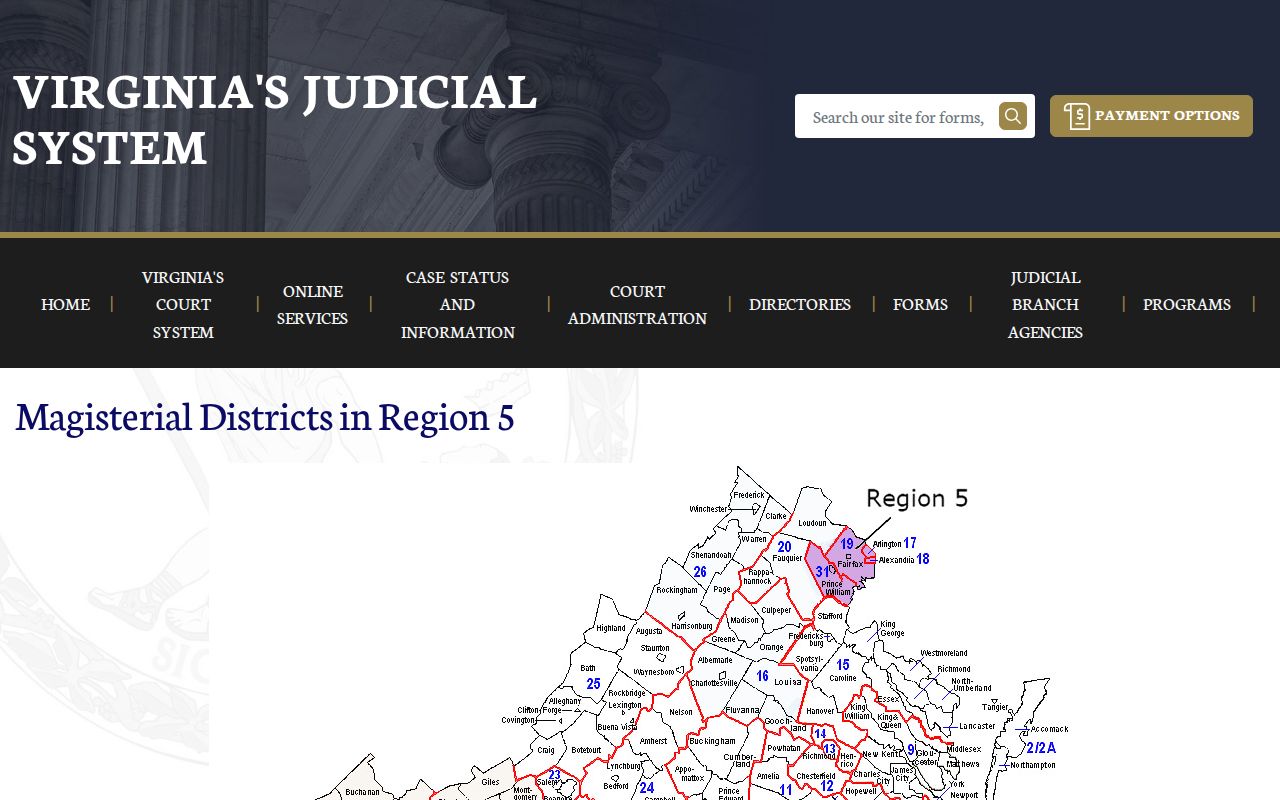
The magistrate office is a judicial channel, not a public online warrant roster.
Arrest Warrants: What They Contain
Virginia's DC-314 misdemeanor form shows what a warrant record can hold. Expect court and locality, the defendant's name and known descriptors, the offense, the misdemeanor class, the Virginia Crime Code, an offense tracking number, a hearing date, an attorney, plus fields for execution and return. Some blanks get filled in later, because the facts were not known when the warrant issued.
| Court | Locality, court name, address, and phone. |
|---|---|
| Charge | Short offense description, statutory reference, classification, and crime code. |
| Identifier | Known name and descriptors; protected details may be absent or redacted. |
| Tracking | Case number and offense tracking number are separate references. |
| Service | Execution date/time, officer, badge, agency, and return information. |
| Bail | Judicial directions or later recognizance paperwork; amount is set case by case. |
Alexandria City posts no sample warrant entry and no fixed local number format. The official district forms index lists DC-314, which is a form number, not a warrant number.
The DC-314 Arrest-Warrant Schema
A form's fields explain why two case screens rarely match. The manual says the identifying block is completed only when facts are known with reasonable certainty. So a public display missing a date of birth or a physical descriptor proves nothing about whether a warrant exists. The court form also carries an attorney field, a hearing date, and the officer's service return. For current links and definitions, use the Virginia criminal forms page. Keep one thing straight: a warrant form is court process, not a public search form. Alexandria City has no published warrant-number format of its own, so rely on the exact case number from the summons or the clerk. If a case result confuses you, write down its date and court. Then ask the clerk to interpret the event. Fields describe process; the court decides outcomes.
How Warrants Get Served in Alexandria City
Serving the paper falls to more than one office in Alexandria City. The Sheriff's Office runs a Field Operations function for court-generated warrant and capias service, and Alexandria Police both applies for and executes criminal process. Virginia Code § 19.2-76 lets an authorized officer execute a warrant or capias anywhere in the officer's jurisdiction, even process issued elsewhere in Virginia. After an arrest, the person goes to the Adult Detention Center for magistrate review. The judicial officer handles initial bail, and the court controls the return or the next date. No fixed release or processing time is published locally. The Sheriff's courthouse overview and the bureau page describe that service role. Remember that service and custody details come from different offices than a court case search.
Sheriff Warrant Service by the Numbers
The Sheriff's Administrative and Judicial Operations Bureau reported 223 warrants executed by Field Operations in 2025, along with more than 14,000 civil documents served. That warrant figure counts completed service, not the size of an outstanding list. Alexandria City publishes no complete warrant list for comparison.
Sheriff's Judicial Services sits at 520 King Street, Suite 308, and lists 703-746-4120. To ask about your own warrant, APD requires an in-person visit with ID. Custody questions about a family member go to detention records. The Alexandria Sheriff overview covers the courthouse and Judicial Services.

Service volume is agency context, not a list of current warrants or named people.
Arrest Warrants, Summonses, and Bench Warrants
An arrest warrant tells law enforcement to take a person into custody. A summons just directs the person to appear. Bench or FTA process usually follows a missed court date or an alleged failure to obey an order. Alexandria City dockets can blur these terms, but each one carries a different trigger and a different court action.
| Process | Basis | Control Point |
|---|---|---|
| Arrest warrant | Probable cause after complaint review. | Issuing judicial officer and serving agency. |
| Summons | Direction to appear in court. | Court or authorized issuing officer. |
| Bench/FTA process | Missed setting or alleged noncompliance. | Court handling the underlying case. |
One Alexandria City file can hold an original charge and a later FTA process. The clerk can name each event and its date.
Sealed Indictment Is Not a Public Warrant List
A sealed indictment is a charge the court keeps out of public view until it authorizes release. It is not a public active-warrant roster. A search warrant is a different tool: it lets officers search a described person, place, or thing for evidence. Virginia Code § 19.2-54 governs when an executed search-warrant affidavit and return generally open to inspection, and it still allows temporary sealing for good cause. Alexandria Police Directive 10.30 sets the local procedures, and an unexecuted or sealed affidavit may stay closed to ordinary inspection. The statute and the issuing court control access. In Alexandria City, do not lean on a crime database as a warrant lookup. APD's Crime Database covers incident data and says plainly that it is not for legal action. Each kind of process carries its own access and service rules.
Arrange Counsel Before Service
A lawyer should come first in Alexandria City when an arrest warrant might be active. Bring photo ID to APD's own-warrant counter to check, then ask the issuing clerk about the case. Counsel can call the court, raise a motion, plan an appearance, and walk you through surrender and bond. Keep in mind that APD Information Services sets neither bond nor recall; the magistrate or judge decides those. Alexandria City also publishes custody lines for anyone already held at the William G. Truesdale Adult Detention Center. Call 703-746-5000 between 6:00 a.m. and 6:00 p.m. for charge, bond, and court date, or 703-746-5050 after hours. The center's 24-hour number is 703-746-4099. No local bond schedule is public, and there is no booking-free walk-in guarantee.
Important: Get legal advice before surrendering. Confirm the court, process, and custody instructions; a public case screen cannot arrange release or recall.
The Alexandria City warrant overview lays out the practical steps for resolving a warrant.
Mill Road First-Appearance Route
Once Alexandria police execute an arrest warrant, Sheriff information says the person goes to the Adult Detention Center to see a magistrate. That magistrate can issue process or set bail. If the arrest moves forward, the person stays in Sheriff's custody. Everything after that returns to the court holding the underlying case. The detention center sits at 2001 Mill Road, and Sheriff administration at 2003 Mill Road. District 18 magistrates staff the detention campus around the clock. For current custody contacts and entry details, use the detention-center page and the official Sheriff FAQ. No local page promises that walking in unannounced skips booking. Sort the logistics with counsel or the issuing office before you go.